 |
v0.15.5 |
Loading...
Searching...
No Matches
|
v0.15.5 |
The MoFEM community is collaborating with researchers at the Green RF-Enabled Electronics Lab to host a three-day outreach programme at the University of Glasgow in May 2026, introducing school students in Glasgow to a range of engineering disciplines. The workshops have a specific focus on the fields of microwave engineering and computational mechanics, and the event looks to involve girls and students from under-represented groups in typically male-dominated STEM subjects. Students will take part in creative and interactive workshops, prompting them to develop problem-solving and teamwork skills whilst exploring potential career pathways.
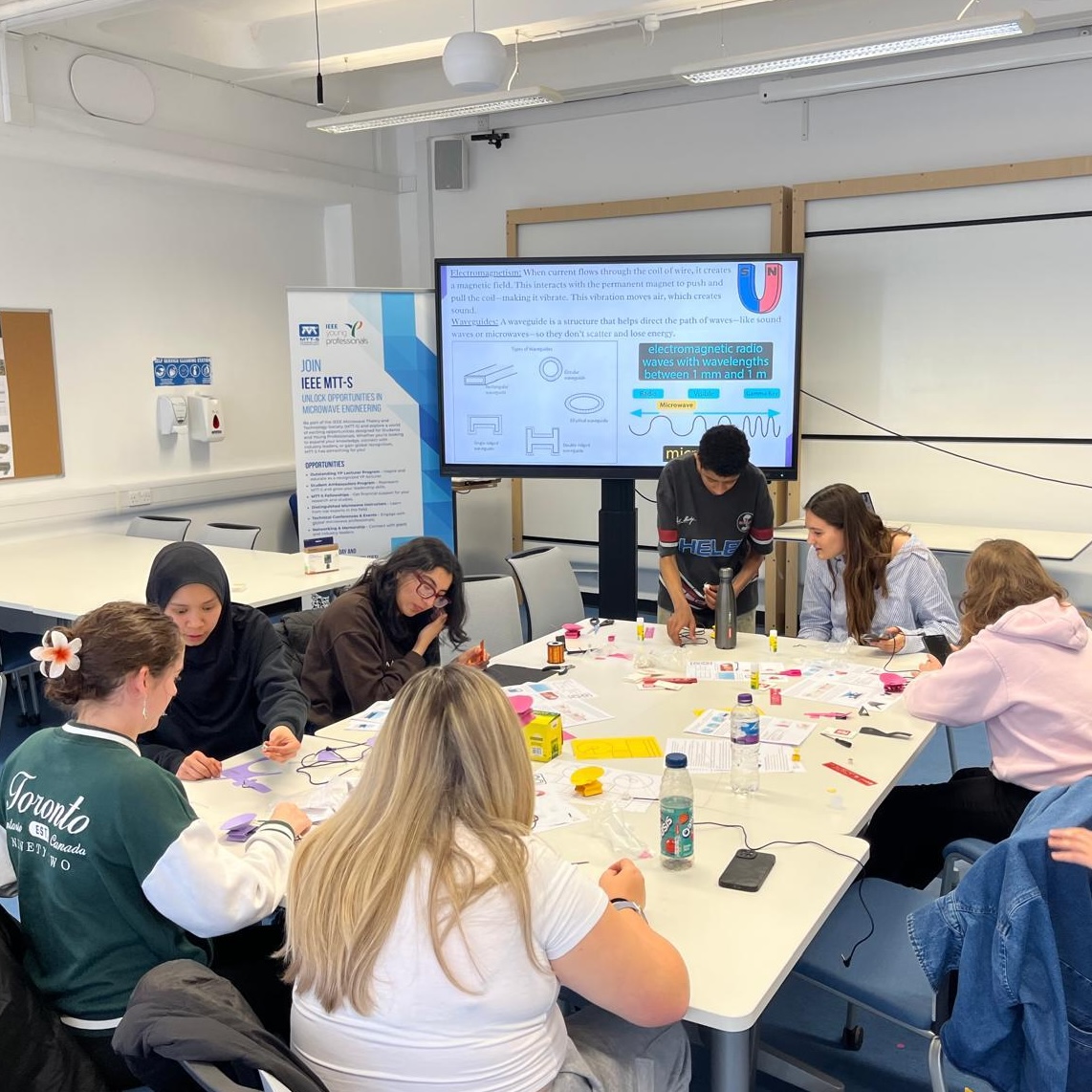
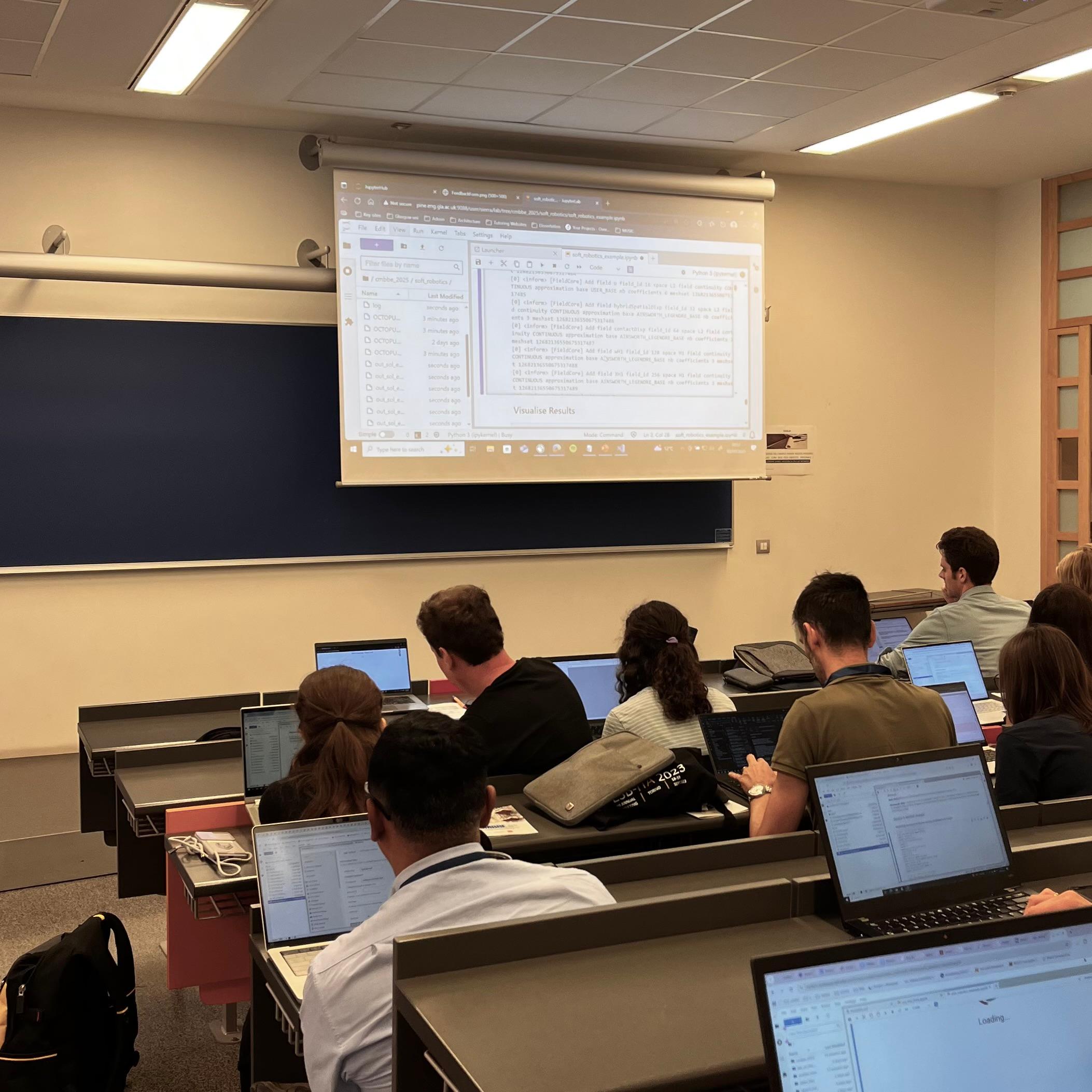
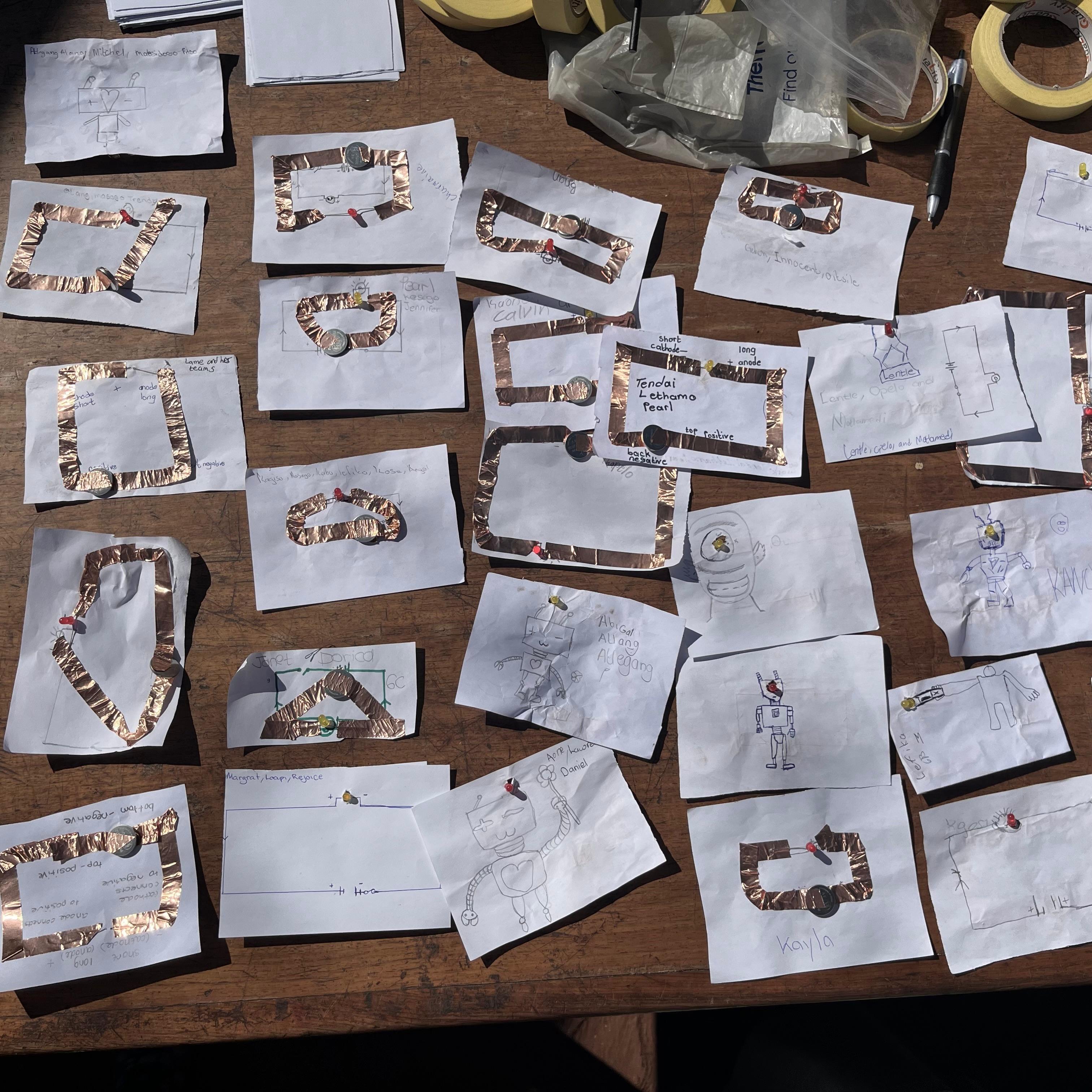
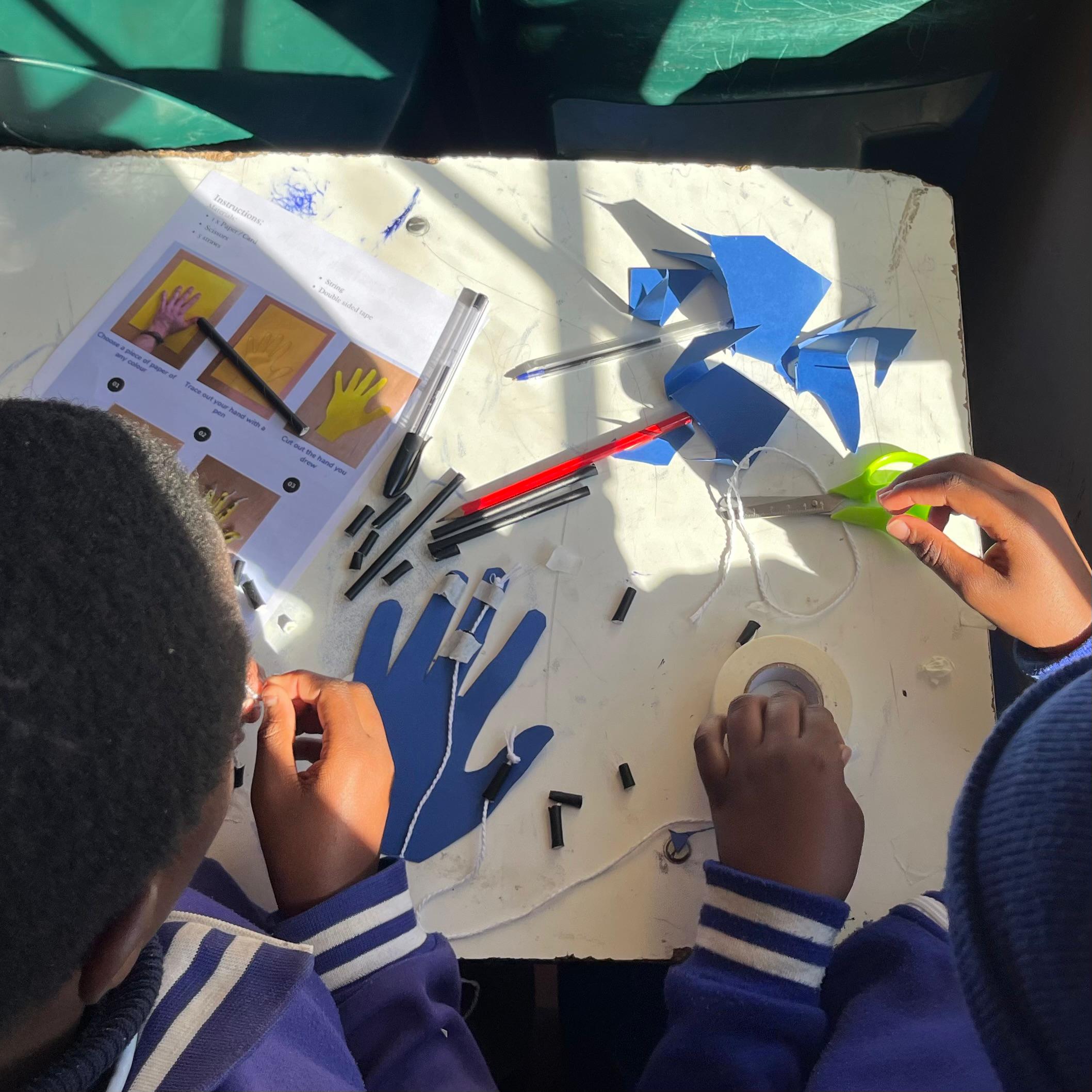
The first day will look at microwave and Radio Frequency (RF) engineering and will be run by Alžbeta Oravcová (PGR) whose research includes developing microwave engineering outreach tools. The activities will introduce participants to the basic concepts of microwave engineering, making connections to its history, and exploring wireless power transfer. This will be done through a series of hands-on workshops and interactive demonstrations, with the goal of introducing the current research developments in microwave engineering.
Recently developed educational tools will be tested throughout this event, such as through the operation of hand-held radios, prompting learning about different types of modulation by sending signals using buttons, signal strength, interference, bandwidth and sustainability. Another activity will introduce the pupils to wireless power transfer through an exercise in math and soldering.
During similar activities run previously, workshops included soldering a telegraph key to introduce the history of microwave engineering; paper loudspeaker building to demonstrate basic electromagnetic principles; and conductive tape circuits to allow for a comparison of microwave circuit design with typical circuits. Wireless power transfer is demonstrated using an interactive tool based on single wire transmission line hidden under a piece of fabric, while the pupils hover flexible rectennas above the fabric to find the position of the wire. Further details of these activities can be found at the following publication.
The second day will introduce participants to the field of computational engineering, led by Lily Sierra, who is part of the MoFEM development team. The day is designed to guide students through the full process of computational modelling, beginning with an introduction to Python, followed by an exercise in building and meshing geometry for simulation.
Next the students will move to the laboratory to perform simple beam deflection experiments, providing an understanding of how physical forces act on structures, and how this behaviour impacts structural design. In the afternoon, students will combine their knowledge of Python and mechanics to run elastic simulations with MoFEM. This activity will demonstrate how computational tools are used to predict real-life problems and provide a fundamental understanding of stress and strain. The day progresses through basic coding and simulation to experimentation, providing insight into the importance of numerical analysis.
The third day will contain activities delivered by FemEng which introduce the fields of civil, mechanical, aeronautical, biomedical and product design engineering. FemEng is a society at the University of Glasgow run by female engineers whose mentoring, outreach and networking schemes aim to build a strong community of women in STEM. FemEng volunteers will deliver a series of practical activities throughout the day in which students will have the opportunity to learn directly from university students and members of the academic community. Activities include building a model stethoscope using balloons and cardboard, building paper rockets and then launching them, designing and testing earthquake-proof skyscrapers using wooden sticks, and making model wind turbines.
Green RF-Enabled Electronics Lab focuses on novel RF technologies which enable, as opposed to solely connect, future green sustainable electronic systems. The research spans from wireless power delivery, electromagnetic sensing, wireless and battery-less sensors, sustainable and circular electronic materials and more. The Lab also focuses on demonstrating the current research to the public through public exhibits and supporting engineering outreach across Glasgow and beyond.
Glasgow Computational Engineering Centre (GCEC) is a research community at the University of Glasgow whose members discover, implement and apply innovative computational solutions to relevant engineering challenges across a range of fields. Our sophisticated modelling and simulation tools enable researchers and industry partners to further understand, predict and optimise engineering and technology design.
If you would like to get in touch as a potential volunteer, participant or teacher, please contact Lily: l.sierra-fisher.1@research.gla.ac.uk or Alžbeta: a.oravcova.1@research.gla.ac.uk.
